A reliable water supply keeps your team healthy, your customers comfortable and your operations running smoothly. Yet many businesses sign delivery contracts without checking the details that matter most. At Al Shalal Water, we help Dubai offices, shops and worksites choose water plans that fit their needs. This guide explains what to review before you commit to any water delivery agreement.
Table of Contents
ToggleKey Takeaways
- Choose a licensed supplier with proper quality approvals.
- Match delivery frequency to your real daily usage.
- Read the fine print on deposits, fees and contract length.
- Ask how bottles are stored, handled and sanitized.
- Look for flexible terms that can grow with your business.
Why Your Water Contract Deserves Careful Attention
Drinking water may seem like a simple purchase. For a business, however, it affects staff wellbeing, customer experience and even legal obligations.
Demand is strong across the country. According to Meydan Free Zone, the UAE bottled water market was valued at about USD 3.81 billion in 2025 and is projected to reach USD 5.22 billion by 2031. The same report points to summer temperatures above 45°C and workforce hydration needs as key demand drivers.
With so many suppliers in the market, a careful review helps you avoid poor service, hidden costs and quality concerns.
1. Confirm the Supplier Is Licensed and Approved
Quality starts with compliance. In the UAE, bottled drinking water is treated as a food product and must meet strict standards.
According to Business Dubai, the Emirates Quality Mark is mandatory for bottled drinking water. Each product and its label must also be registered with Dubai Municipality before sale, with samples tested by the Dubai Central Laboratory.
Before signing, ask the supplier for:
- A valid trade license
- Proof of Emirates Quality Mark certification
- Dubai Municipality product registration
- Recent water quality test reports
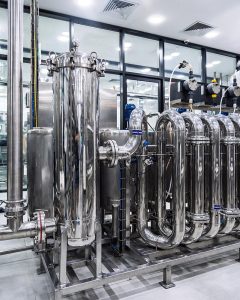
- Details of the water source and treatment process
A trustworthy supplier will share this information openly.
2. Understand Water Quality and Safety
Not all water is equal. Research supports the value of choosing a reliable bottled supply. A systematic review published in Population Medicine, involving researchers from UAE universities, examined 14 studies on drinking water in the UAE. It found that tap water had more quality concerns, while issues in bottled water were mainly limited to a few chemical parameters.
Dubai authorities also take water safety seriously. The Dubai Municipality launched the Safe Water for a Healthy Community initiative in March 2025. Its first phase covers 42 homes and villas across 10 areas, with water samples analyzed at the Dubai Central Laboratory. The municipality also advises cleaning water tanks at least every six months through approved companies.
Ask your supplier how often they test their water and whether they can share recent results.
3. Check How Bottles Are Stored and Handled
Even high quality water can be affected by poor storage. This is one of the most overlooked parts of any delivery agreement.
A Gulf News investigation found bottled water stored in unsuitable places such as garbage rooms and next to cleaning products. A quality control manager quoted in the report warned that direct sunlight can affect water quality in less than an hour.
Research adds weight to this concern. A study by researchers at Gulf Medical University in Ajman tested polycarbonate 5 gallon bottles in the UAE. It found that bisphenol A (BPA) levels rose significantly over 30 days, with the highest levels in bottles stored outdoors in sunlight.
Ask potential suppliers these questions:
- Are delivery vehicles covered and temperature controlled?
- How long are bottles kept in the warehouse before delivery?
- Are bottles inspected and sanitized before refilling?
- What bottle materials do you use?
- How do you rotate stock to keep water fresh?
Water bottle Storage also matters once bottles reach your premises.
4. Match Delivery Frequency to Your Usage
Running out of water disrupts the workday. Ordering too much wastes storage space and ties up money in bottle deposits.
Start by estimating your daily consumption:
- Count staff and regular visitors
- Note seasonal changes, especially in summer
- Include water used for tea, coffee and meetings
- Allow extra stock for busy periods and events
Then ask the supplier about scheduled deliveries, emergency top ups and how quickly they respond to urgent requests. A good supplier should adjust your schedule as your needs change.
5. Review Pricing, Deposits and Hidden Fees
The price per bottle is only part of the story. Read the full cost structure before you sign.
Look closely at:
- Bottle Deposits: How much is charged and how refunds work
- Delivery Charges: Whether fees apply to small or urgent orders
- Dispenser Costs: Purchase, rental or free with a minimum order
- Price Changes: How much notice the supplier gives before price increases
- Payment Terms: Monthly invoicing, prepaid coupons or online payment
Ask for a written quote that lists every charge. Clear pricing makes budgeting easier and avoids disputes later.
6. Consider Contract Length and Exit Terms
Some contracts lock businesses into long terms with strict penalties. Before you commit, check:
- The minimum contract period
- Notice required to cancel or change your plan
- Penalties for early termination
- How deposits are returned when the contract ends
- Whether you can pause service during closures
Flexible terms are especially valuable for growing businesses, seasonal operations and companies planning an office move.
7. Ask About Dispensers and Maintenance
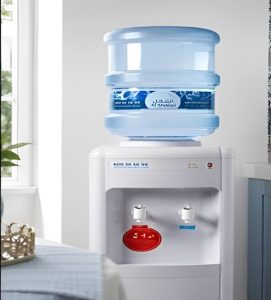
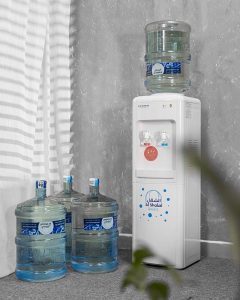
Your dispenser affects both convenience and hygiene. Ask whether the supplier provides dispensers, who maintains them and how often they are cleaned.
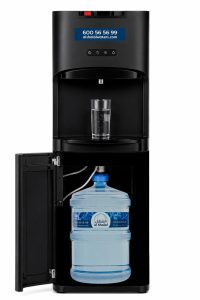
Bottom loading models are a popular choice for busy workplaces because staff do not need to lift heavy bottles.
A clear maintenance plan should include regular sanitization, quick repairs and replacement if a unit fails.
8. Plan for Workplace Hydration Requirements
For businesses with outdoor teams, water supply is more than a comfort. It is a responsibility.
According to Arabian Business, the UAE’s 2025 midday break ran from 15 June to 15 September, with work under direct sunlight banned between 12:30 pm and 3 pm. Employers must provide shaded areas, cooling equipment and adequate drinking water. Violations can lead to fines of AED 5,000 per worker, up to AED 50,000.
If you manage construction sites, logistics teams or field staff, make sure your contract covers reliable deliveries to every location.
9. Think About Sustainability
Businesses across Dubai are reducing single use plastics. Dubai Eye 103.8 reported that the final phase of Dubai’s single use plastic ban began on 1 January 2026, covering items such as plastic plates, cutlery, beverage cups and lids.
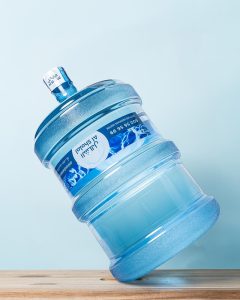
Reusable 5 gallon bottles support these goals. Ask your supplier about bottle return programs, recycling practices and reusable cup options for your water stations.
10. Evaluate Customer Service
Strong customer service makes a long term partnership easier. Look for a supplier that offers:
- A dedicated account contact
- Easy online or phone ordering
- Reliable delivery time windows
- Fast responses to complaints
- Clear records of deliveries and invoices
Reading reviews and asking other businesses for recommendations can also help you judge reliability.
A Quick Checklist Before You Sign
- Verify licenses and quality certifications.
- Request recent water test results.
- Confirm storage and delivery standards.
- Estimate your usage and agree on a delivery schedule.
- Review all costs, deposits and payment terms.
- Check contract length and cancellation terms.
- Agree on dispenser supply and maintenance.
- Confirm customer support and response times.
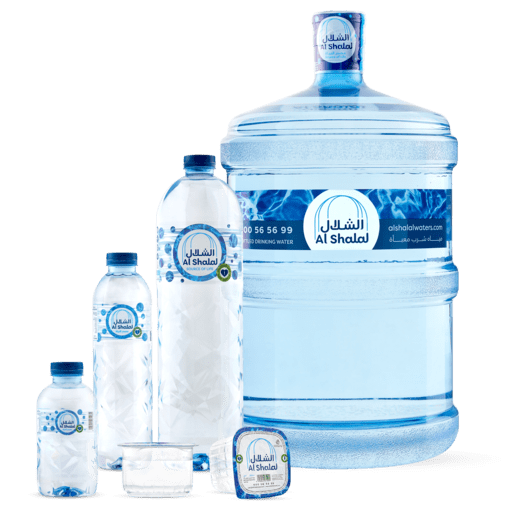
At Al Shalal Water, we offer a range of water products for offices, retail stores and worksites, supported by dependable delivery across Dubai.
Conclusion
The right water delivery contract protects your team, your budget and your reputation. By checking quality approvals, storage standards, pricing, contract terms and service levels, you can choose a supplier with confidence. Contact us today to discuss a flexible delivery plan that keeps your business supplied with fresh, safe drinking water every day.
FAQs:
Usage varies by team size and season, but many offices plan around one to two liters per employee daily.
Most suppliers recommend sanitizing water dispensers every few months, or more often in busy workplaces.
Yes. Bottled water in Dubai must meet strict quality standards, including Emirates Quality Mark certification and municipal registration.
Many suppliers charge a refundable deposit for 5 gallon bottles. Confirm the amount and refund terms before signing.
It depends on the agreement. Check the minimum term, notice period and any early termination fees beforehand.
Heat and sunlight can affect water quality and plastic bottles, so store them in a cool, shaded area.