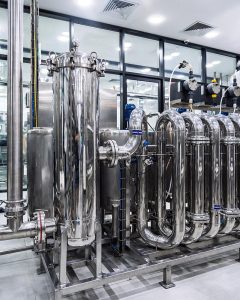
Most people never think about what happens between a water source and the moment they take a sip. But the journey matters, a lot. Al Shalal Water uses a 21-stage water purification system to ensure every bottle delivers pure, mineral-balanced water that is genuinely good for you. Here is exactly what that process looks like.
Table of Contents
ToggleKey Takeaways
- A 21-stage system combines physical, chemical, and biological treatment methods.
- Each stage targets a specific category of contaminants.
- Mineral reintroduction after purification enhances both taste and health value.
- Multi-stage UV and ozone treatment provides final microbial safety.
- More stages mean fewer gaps in protection for the end consumer.
Why 21 Stages? The Case for Multi-Layer Purification
A single-stage filter removes some contaminants. But drinking water contains a complex mix of physical particles, dissolved chemicals, heavy metals, and biological pathogens. No single method addresses all of them at once. Quality certifications matter because they provide independent verification that purification processes consistently meet recognised safety and water quality standards. According to the Centers for Disease Control and Prevention (CDC), at least 1.1 million people get sick every year from germs found in drinking water. That figure puts into perspective why relying on minimal filtration is not enough when producing water meant for daily human consumption.
A 21-stage purification system addresses this by layering complementary technologies, each designed to handle specific contaminants that others might miss. The result is water that has been verified clean at every critical control point, a standard reflected across the products at Al Shalal Water supplied throughout Dubai and Sharjah.
The Core Stages of a 21-Stage System
While the exact configuration varies by manufacturer, a robust 21-stage system typically moves water through these key treatment phases:
Phase 1: Pre-Filtration (Stages 1-4)
Stage 1 — Coarse Sediment Filter: Removes large particles like sand, rust, and debris.
Stage 2 — Fine Sediment Filter: Captures finer particulates that passed the first filter.
Stage 3 — Granular Activated Carbon (GAC): Reduces chlorine, pesticides, and organic compounds that cause off-tastes and odors.
Stage 4 — Carbon Block Filter: A denser carbon filter for deeper removal of chloramines and volatile organic compounds.
Phase 2: Core Membrane Treatment (Stages 5-8)
This is where the heavy lifting happens. Reverse osmosis effectively removes bacteria, heavy metals like copper and lead, and a wide range of chemical pollutants.
Stage 5 — Reverse Osmosis (RO) Membrane: Forces water through a semi-permeable membrane, removing dissolved salts, nitrates, arsenic, fluoride, and most heavy metals.
Stage 6 — Second RO Pass: A second membrane pass for ultra-high purity, especially in industrial or commercial water production.
Stage 7 — Ultrafiltration (UF) Membrane: Removes any remaining bacteria, viruses, and colloidal particles.
Stage 8 — Nano-Filtration Membrane: Addresses residual trace minerals and micro-contaminants.
Phase 3: Mineral Reintroduction (Stages 9-12)
Pure water without minerals can taste flat and lacks the naturally occurring benefits of calcium and magnesium. This phase adds them back in a controlled, measured way. The Academy of Nutrition and Dietetics recommends adult males consume up to 3.7 liters of water daily, making the quality of what goes in critically important.
Stage 9 — Mineral Cartridge: Adds calcium, magnesium, and trace elements back into the purified water.
Stage 10 — pH Balancing Filter: Adjusts the water to an optimal slightly alkaline pH of 7.2-7.5.
Stage 11 — Infrared Energy Filter: Restructures water molecules for better cellular absorption.
Stage 12 — Alkaline Enhancement: Fine-tunes mineral concentrations for a clean, refreshing taste.
Phase 4: Disinfection (Stages 13-17)
Even after membrane treatment, final disinfection ensures no microbial risks remain. Ozone is one of the most powerful tools for this purpose. At least 3,000 cities worldwide use ozone to purify their drinking water, and the FDA classified ozone as generally recognized as safe for bottled water as far back as 1995.
Stage 13 — First UV Sterilization: Ultraviolet light disrupts the DNA of remaining bacteria and viruses without leaving any chemical residue.
Stage 14 — Ozone Treatment: Ozone gas neutralizes organic compounds, algae, mold, and bacteria that UV may have missed.
Stage 15 — Second UV Pass: A second UV exposure eliminates any trace organisms activated or disturbed by the ozone stage.
Stage 16 — Chlorine-Free Disinfection: Ensures no disinfection byproducts (DBPs) are introduced during the final treatment.
Stage 17 — Holding Tank Sterilization: The purified water storage tank is treated to prevent any post-purification recontamination.
Phase 5: Final Polishing and Quality Assurance (Stages 18-21)
Stage 18 — Post-Carbon Polish Filter: A final activated carbon pass removes any residual taste or odor before bottling.
Stage 19 — Sub-Micron Filter: Captures any ultra-fine particles remaining after all prior stages.
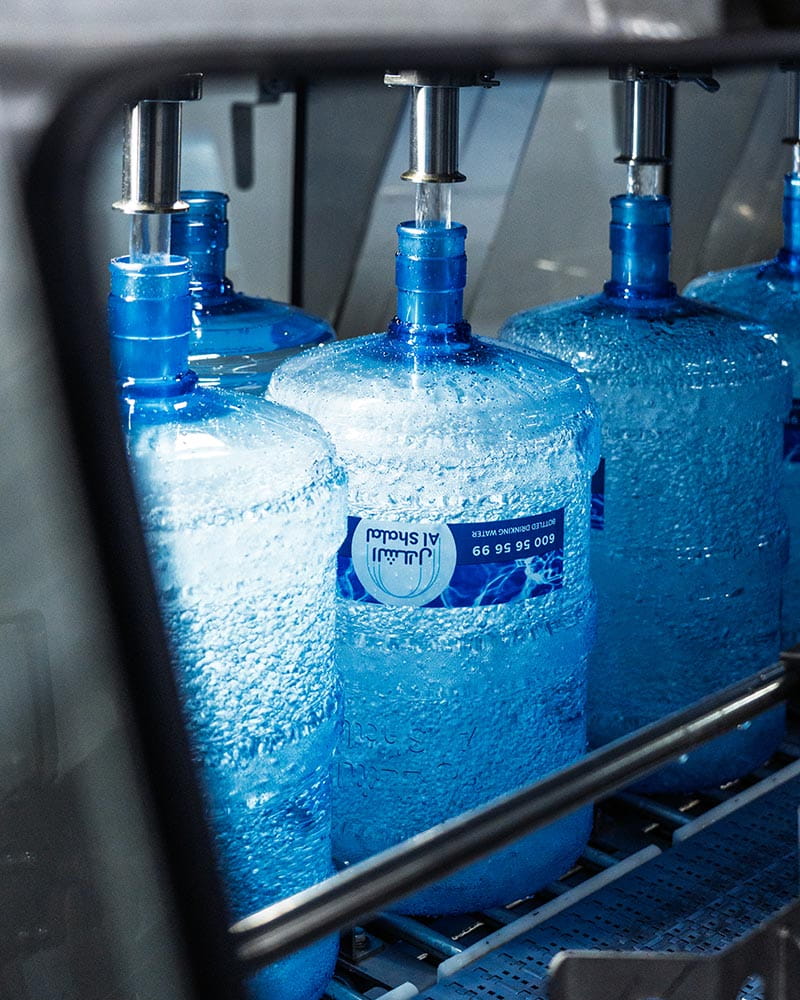
Stage 20 — Final UV Sterilization: One last UV treatment immediately before bottling for maximum safety.
Stage 21 — Quality Control and TDS Verification: Total Dissolved Solids (TDS) and microbial testing confirm the finished product meets all safety and taste benchmarks.
What Contaminants Does It Remove?
A well-executed 21-stage system addresses virtually every class of contaminant the National Primary Drinking Water Regulations sets safety limits for. This includes:
- Biological: Bacteria, viruses, cysts like Cryptosporidium and Giardia
- Chemical: Chlorine, chloramines, pesticides, herbicides, volatile organic compounds
- Heavy Metals: Lead, arsenic, mercury, cadmium
- Dissolved Solids: Nitrates, fluoride, sulfates, salts
- Physical: Sediment, rust, turbidity, suspended particles
Arsenic, lead, PFAS, nitrates, and disinfection byproducts as the most significant ongoing concerns in drinking water. A 21-stage system is specifically designed to address each of these.
How Al Shalal Water Uses This System
Al Shalal Water’s production process is built on a commitment to rigorous purification. The 21-stage system forms the backbone of how the brand consistently delivers clean, mineral-balanced water to homes and offices across Dubai and Sharjah.
Paired with certifications like ISO 9001, ISO 22000, and a Gold A Grade from Dubai Municipality, the purification system is regularly audited and independently verified. This is not self-reported quality. It is independently confirmed quality.
For households and offices, the practical outcome of a 21-stage system is simple. You get water that not only meets safety standards but genuinely tastes clean, has the right mineral balance, and has had every realistic contamination risk addressed.
Is More Always Better? Understanding Stage Count
The question people often ask is whether 21 stages are necessary or just a marketing number. The answer depends on the source water quality and the intended use. For large-scale commercial water production where consistency and safety need to be guaranteed batch after batch, more stages provide redundancy.
Higher-stage systems like 12-21 stage configurations provide broader and deeper filtration through more layers of pre-treatment and post-treatment. Each additional layer acts as a safety net, especially for contaminants that vary seasonally or by water source.
The reverse osmosis systems sold for home use typically include activated carbon and sediment filters as part of a combined approach. Professional commercial systems take this much further, which is exactly what a 21-stage system does.
Water utilities must follow regulations covering more than 90 contaminants. Producing bottled water that exceeds these standards at every stage is what separates a rigorous 21-stage system from standard municipal treatment.
Multi-layer quality management frameworks are directly linked to safer outcomes and stronger consumer confidence in the food and beverage sector.
Conclusion
A 21-stage purification system is a commitment to getting every detail right, from source to bottle. It is what makes the difference between water that simply passes safety minimums and water you can genuinely feel good about drinking every day.Reach out to us today to learn more or to place your first order.
FAQ:
It removes sediment, heavy metals, bacteria, viruses, chlorine, pesticides, nitrates, and dissolved salts.
Yes. It adds pre-filtration, mineral reintroduction, and multiple UV and ozone disinfection stages that standard reverse osmosis systems typically lack.
Reverse osmosis stages do remove minerals, but dedicated remineralization stages add them back in balanced amounts.
Filter cartridges are typically replaced every 3 to 6 months, while the reverse osmosis membrane is usually replaced every 1 to 3 years.
Yes. The thorough removal of contaminants and balanced mineral content make it suitable for people of all ages, including babies and children.
UV treatment uses ultraviolet light to neutralize microorganisms by damaging their DNA, while ozone treatment uses reactive ozone gas to oxidize and destroy pathogens and organic compounds.